會員登入
 註冊

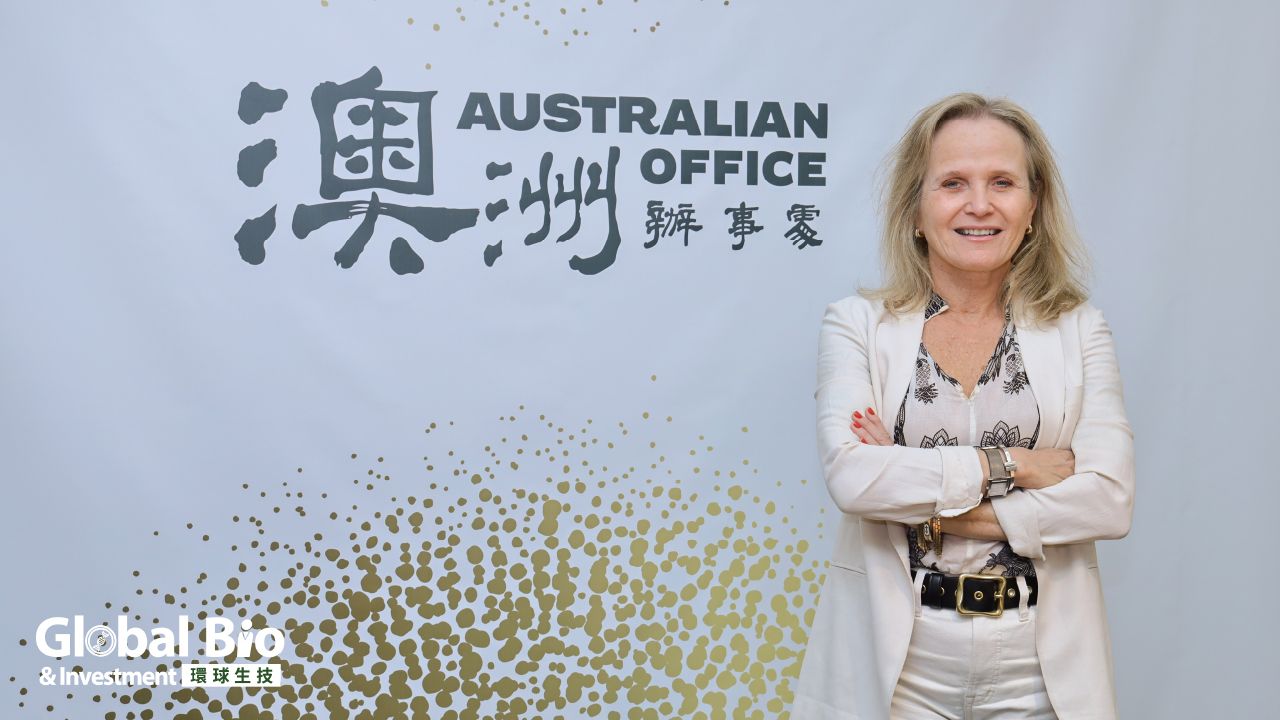
Sharon Lewin, an Australian infectious diseases physician and virologist, has worked through two of the most consequential infectious disease crises of modern times: the emergence of HIV/AIDS in the 1980s and the COVID-19 pandemic in 2020. Over four decades, she has helped develop diagnostic techniques, championed HIV cure research and played a leading role in public health responses. With advances in artificial intelligence (AI), single-cell technologies, mRNA and immunotherapy, Lewin says infectious disease research is entering a "golden age" that offers new ways to prepare for the next pandemic.
By Pei-An Wu
The emergence of acquired immunodeficiency syndrome (AIDS) in the early 1980s and the COVID-19 pandemic of 2020 left an indelible mark on human history. Both also drove advances in infectious disease care, bringing together experts across disciplines to develop new diagnostic tools and treatment strategies.
Lewin, a former president of the International AIDS Society (IAS), spoke with Global Bio & Investment Monthly during a visit to Taiwan in April 2026. She said AI, single-cell technologies, big data, mRNA and immunotherapy give scientists an unprecedented set of tools for long-standing problems in infectious diseases.
"I think in many ways it's really a golden age for infectious diseases because we can use all this new technology—single-cell technologies, AI, big data, and mRNA-based new antibody capabilities—to really transform the way we've managed these long-term infections," she said.
The world's recovery from COVID-19 should not breed complacency, she said. Investment in infectious disease research must keep growing to prevent another unknown pathogen from causing widespread global disruption.
Lewin has been the inaugural director of the Peter Doherty Institute for Infection and Immunity since 2014 and the inaugural director of the Cumming Global Centre for Pandemic Therapeutics since 2022. She has authored more than 420 scientific publications.
In 2019, she was appointed an Officer of the Order of Australia (AO) for distinguished contributions to medical research and education, particularly in HIV/AIDS and infectious diseases.
Much of her research has examined why HIV persists in people receiving antiretroviral therapy (ART), with the goal of finding a cure. After COVID-19 emerged, her interests expanded to SARS-CoV-2 diagnostics and therapeutics and to broader pandemic preparedness.
Witnessing the HIV Epidemic Firsthand
Lewin's path to becoming a clinician-scientist focused on HIV began in the 1980s, as AIDS emerged as a global health threat.
She was already interested in infectious diseases when she began studying medicine in 1981. AIDS was among the first emerging infections she encountered in training, at a time when little was known about the condition.
In 1983, researchers at the Institut Pasteur in France, including Françoise Barré-Sinoussi and Luc Montagnier, isolated the virus from a patient's lymph node. It was named HIV in 1986, establishing the cause of AIDS.
For Lewin, the turning point came in 1989. About two years after becoming a doctor, she spent a year at a small hospital in Kenya, about two hours outside Nairobi, where she saw the epidemic's impact firsthand.
"We thought of it as a disease of gay men, largely, but in Africa it was an infection that everyone was infected by," she recalled. "There was no treatment. There were babies getting infected, women infected."
HIV posed complex medical and scientific problems, but it was also entwined with patients' lives, social stigma and broader social structures. In the epidemic's early years, many patients became seriously ill or died in the prime of life.
The experience changed how she saw her career.
"I knew, after my time in Africa, that I didn't want to be a doctor working at the front line in a small hospital. I wanted to have an impact through research on the global response to HIV," she said.
After returning to Australia and completing specialist training, Lewin pursued a PhD in microbiology at Monash University. Her supervisor was Suzanne Crowe, a clinician-scientist who later became president of the Medical Council of Ireland.
Lewin spent 18 months as a postdoctoral fellow at the Aaron Diamond AIDS Research Center, led by David Ho, where she helped develop several diagnostic assays. Ho is shown discussing trends in HIV drug development during a visit to Taiwan in July 2024. (Photo: Tzu-Han Peng)
Learning From David Ho
Lewin credits several scientific mentors, among them HIV researcher David Ho.
In 1997, after securing an Australian government scholarship, she went to New York for an 18-month postdoctoral fellowship at the Aaron Diamond AIDS Research Center (ADARC), led by Ho.
Ho's work had helped scientists understand how HIV replicates in the body, contributing to highly active antiretroviral therapy, known as combination or "cocktail" therapy. The breakthrough transformed HIV treatment worldwide, and TIME magazine named Ho its Person of the Year in 1996.
Combination therapy could reduce HIV in the blood to undetectable levels, but the virus did not disappear. It persisted in infected cells in a latent state and could rebound once treatment stopped. Finding where HIV hid in treated patients became one of Lewin's main tasks in Ho's lab.
Using real-time polymerase chain reaction (PCR), then a relatively new technology, together with molecular beacons, she developed highly sensitive assays that can quantify very low levels of unspliced HIV RNA inside infected cells. The assays detected ongoing viral transcription in some patients even when standard blood tests showed HIV suppressed below the limit of detection, further evidence that the virus can persist despite effective treatment.
"My job was to develop new tests to find very small amounts of virus inside the cell, not outside the cell," Lewin recalled. "It was always there, you just needed better tools to measure it."
The assays remain widely used in HIV cure research, p...