會員登入
會員登入 註冊
註冊
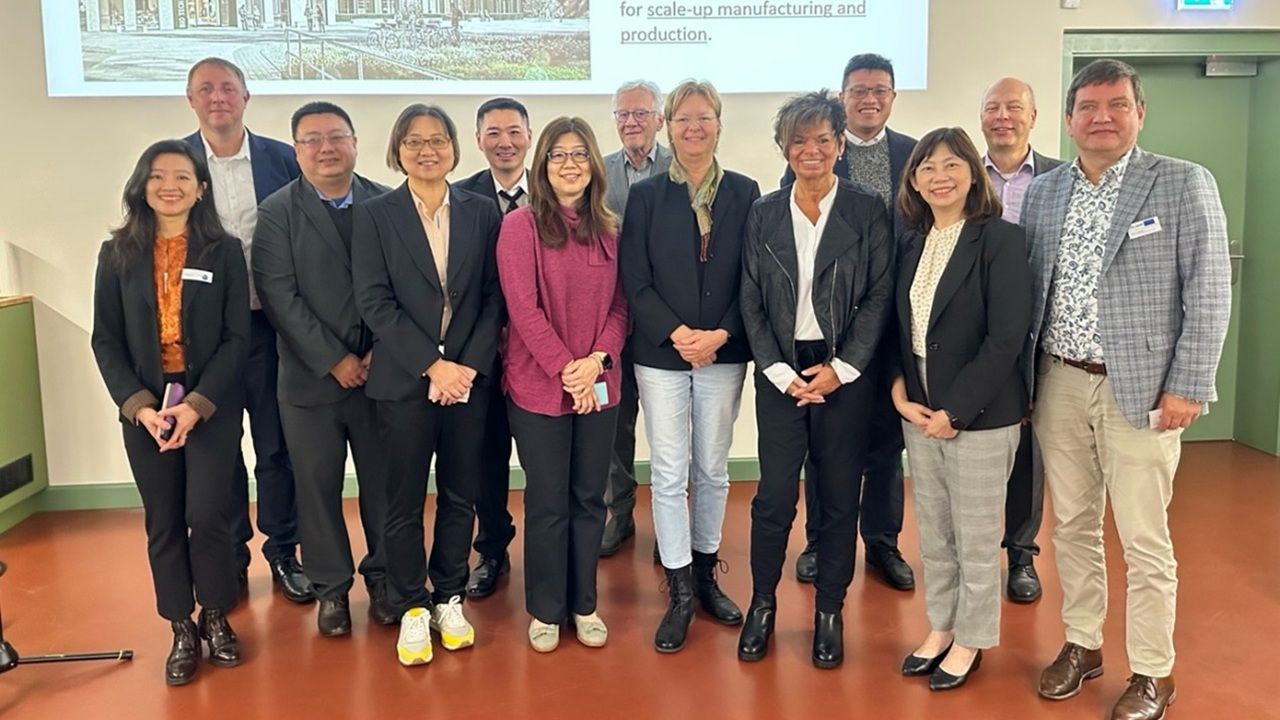


The Medical and Pharmaceutical Industry Technology and Development Center (PITDC) was accompanied by Counselor Ching-Yun Huang and Secretary Yi-Chiao Chiu from the Economic Division of the Taipei Representative Office in Germany, led a delegation of Taiwanese pharmaceutical companies to the Berlin metropolitan region on October 23–24, 2025. Several major biomedical hubs, such as IHK Potsdam, Luckenwalde Biotechnology Park, and the Life Science Cluster Hennigsdorf, were visited. During the visit, views were exchanged on market positioning and regulatory frameworks in the pharmaceutical industries in Taiwan and Germany as well as related global issues. Opportunities for future collaboration in R&D, manufacturing, and strategic industry development were explored.
Germany is the world's fourth-largest pharmaceutical market and has recently aimed to strengthen its biomedical value chain. In addition to advancing key R&D and manufacturing capabilities, the German government is supporting the pharmaceutical sector through funding research funding, developing cluster-based innovation centers, and implementing mechanisms that encourage collaboration between academia and industry. The aim with these initiatives is to accelerate technology transfer and commercialization through fostering strong connections among universities, research institutes, pharmaceutical companies, and biotech start-ups.
The Berlin–Brandenburg metropolitan region now hosts more than 730 biotechnology, pharmaceutical, and medical technology companies. Supported by leading academic research institutions, extensive clinical trial resources, and a well-developed healthcare network, the Berlin–Brandenburg metropolitan region has become one of Europe's main hubs for biomedical innovation. The region features global pharmaceutical companies such as Bayer, B. Braun, Berlin-Chemie, Biotronik, Eckert & Ziegler, Pfizer, Sanofi, Takeda, and Thermo Fisher, alongside numerous small and medium biotech firms engaged in specialized R&D. These companies collectively form a complementary ecosystem in which established industry leaders and innovative start-ups can grow and thrive.
The Berlin–Brandenburg Healthcare Cluster is a major hub for life sciences and medical research, gathering organizations and companies in the fields of biopharmaceuticals, diagnostics, laboratory medicine, regenerative medicine, and industrial biotechnology. The cluster incorporates R&D, manufacturing, clinical trials, and industry networking, creating a fully integrated value chain. The PITDC delegation visited the cluster to further understand its operating model, including the governance structure, pathways for company growth, and international collaboration mechanisms. The insights gained will provide valuable reference points for Taiwanese pharmaceutical and biotech firms seeking to enter the European market.
The delegation met with Dr. Kai Joachimsen, CEO of the German Pharmaceutical Industry (Bundesverband der Deutschen Industrie, BPI). They shared perspectives on the current pharmaceutical market landscapes in Taiwan and Germany, industrial strategies, regulatory systems, and global challenges such as drug shortages and supply chain resilience. They also discussed Germany's approaches to ensuring drug supply, procurement policies, and efforts to ensure production. PITDC committed to continuing to monitor developments in Germany and the EU regarding pharmaceutical policy, R&D support mechanisms, and the operation of biotechnology clusters. The center will evaluate potential collaboration models and market entry opportunities for Taiwanese pharmaceutical and biotech companies, providing guidance for future planning of international clinical collaboration, licensing partnerships, and global supply chain strategies.
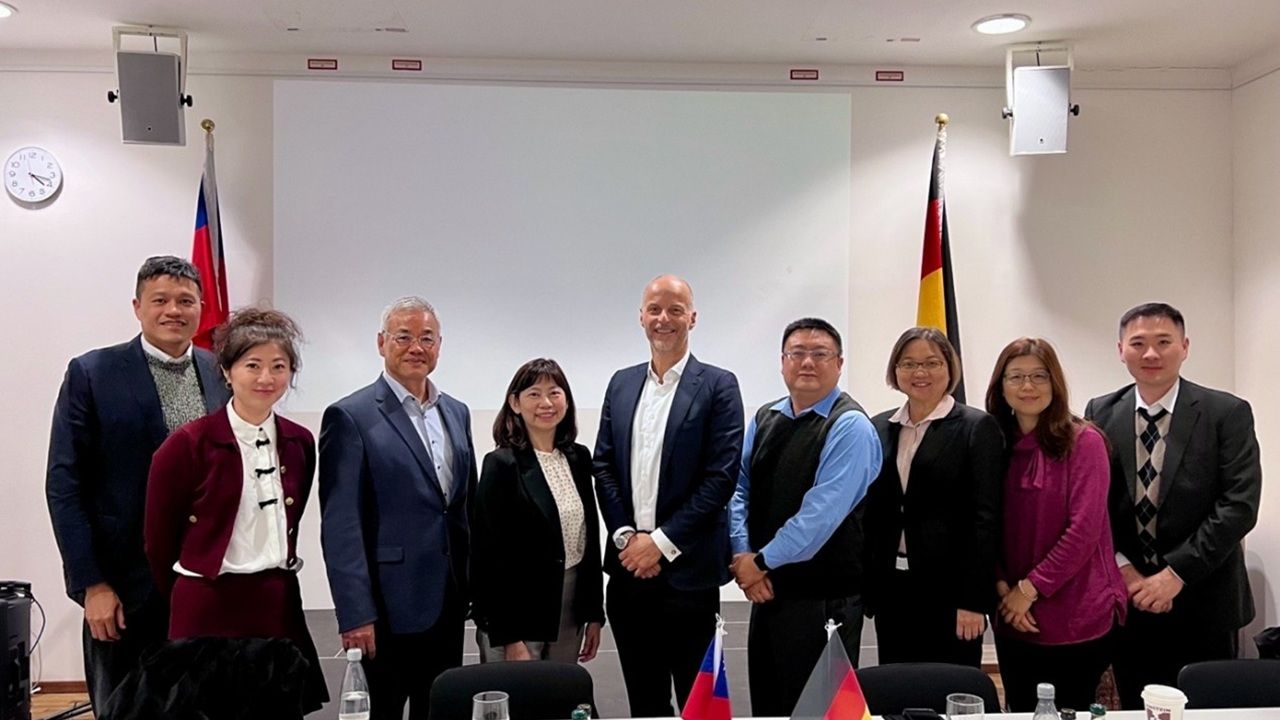
PITDC arranged a meeting with Dr. Kai Joachimsen, fifth from left, CEO of the Bundesverband der Deutschen Industrie (BPI).